
Your Order
Race and Ethnicity: Social Impact, Racism, and Inequality
Sample Content
Race and Ethnicity: Social Impact, Racism, and Inequality
Race and Ethnicity – Is it a Boon or a Bane for Humanity?
Following the American Psychology Association’s Guidelines
Student’s Name
Institutional Affiliation
Word Count - 947
Race and Ethnicity – Is it a Boon or a Bane for Humanity?
Race and Ethnicity, the two concepts relating to the human ancestry, have often been a major concern for a myriad sociologist in recent times (Blakemore, 2019). Whereas the term Race refers to a category of people sharing common physical traits such as the skin tone, stature and facial features (University of Minnesota, n.d.), Ethnicity, on the other hand, is a term given to a large group of people, who are classified according to the background related to the race, nation, religion, tribe, language or culture (Blakemore, 2019). The concept of Race and Ethnicity have often been found to be in conflict if it is more of a biological construct or a social construct (University of Minnesota, n.d.). Ever since the colonization by white Europeans over other parts of the world, the concept of Racism and Ethnicity has been considered more of a social construction rather than a biological one (University of Minnesota, n.d.). Thus, came the oppression of people with black tone by the white toned Europeans ever since colonization (University of Minnesota, n.d.) that has made Race and Ethnicity a matter of social concern. Additionally, Historical attempts to group people according to their race has underscored the concept of Racism and Ethnicity as a social problem in recent times. This pamphlet tries to examine the social issue of Racism and Ethnicity if “All Lives Matter” or just the “White or Black Lives Matter”? and tries to explore if “Racism and Ethnicity is a boon or a bane for humanity?”
Racism and Ethnicity – A Bane Rather Than a Boon for Humanitythan a Boon for Humanity
A question that strikes the minds of sociologists and social scientists across the world is “Do Black Lives Matter”, or “Do All the Lives Matter?” If all lives matter then why to just emphasize on a particular Race or Ethnicity? The reason that has activated the movement of “Black Lives Matter” across the world, especially in United States is owing to the oppression of Black people by the White Americans (Lutz, 2018). The US 2010 Census indicates that United States has still not recovered from the slavery of Blacks such that around 22% Blacks live below poverty line that is twice that off their White counterparts (Long, 2015). Besides these, Black women are two times more likely to get arrested by the police than the White women (Figure 1) (Lutz, 2018).
Figures 1 and 2: Racial Discrimination in the United States
Figures 1 and 2 from the ‘The Sentencing Project’ Report indicates how the Black people are being discriminated in the United States as compared to the other groups.
Thus, emerge unrest, injustice and inequality in the society that indicates Racism and Ethnicity is a social problem that has a detrimental effect on not just the lives of oppressed but the oppressors also. Whereas Oppressors act as authoritarians, oppressors become rebellions and create wreck-havoc in the society. Not only does Racism leads to impediment in achieving full human potential but also leads to retaliation by the oppressed in the society (https://ctb.ku.edu, n.d).
Interventions to Address Racism and Ethnicity Social Concerns
The Movement “Black Lives Matter” was started in response to the deaths and oppression of Blacks by the White Americans to strongly abolish the issue of Racism and Ethnicity in the United States (Siscoe, 2016). In light of the social problem of Racism and Ethnicity, interventions like equal employment at workplace, in Educational Institutions and Healthcare settings have encouraged the vision of achieving a just society.
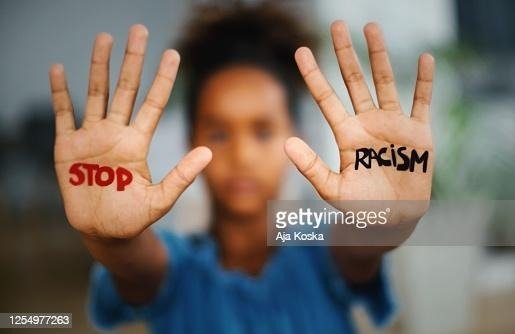
(Source: Gettyimages)
There are a number of strategies in place to address the social issue of Racism. For instance, the Legislative Measures in the countries like Bolivia, Chile, Lithuania, Greece, Ecuador have been taken, according to which, discrimination on the basis of Race have been declared as a punitive offence (The UN, 2015). Countries like Costa Rica, Argentina, Peru, Serbia, to name a few, have adopted National Plans against discriminations of people of African origin. There are also Monitoring bodies and complaint mechanisms adopted by a number of countries like Bolivia, Portuguese, Greece, Costa Rica, to name a few. Besides these, Awareness raising campaigns, Capacity Building and Research programs against Racism have been initiated in many countries, as per the United Nations (2015).
Organizations Addressing Racism and Ethnicity concerns in the Toronto
A number of organizations have been working to abolish the issue of Racism in the Canada. For instance, one of the social service agencies, Toronto For All, runs its campaign on Anti-Black Racism in the city of Toronto. It recommends to collaborate with funders to address the issues facing the Black youth living in the Toronto such as the issues related to skill development and on -the-job mentorship programs for Black Youth (Torontoforall.ca, n.d.).
Another project on Black Youth Resilience Project (BYRP) by Revive works in partnership with East Metro Youth Services to address the racial concerns facing children and youth in the ATG area. It caters to these Blacks and build the leadership and community engagement skills in them (Revive, 2018).
Harmony Movement, another organization works in the Canada with the mission to encourage all Canadians to value diversity and to ensure a just and caring society (Harmony Movement, n.d.). The above organizations and their programs not only ensure justice for all but a society that aims to make Race and Ethnicity more than just a social categorization of humanity.
Conclusion
To conclude, Racism and Ethnicity, over the years, has become a social concern that needs to nipped for the betterment of Humanity. The biological categorization of Human Race that has taken up the form of social inequality in the form of Racism and Ethnicity, should be eradicated to ensure that the categorization of Human beings is done for good and not merely for creating unjust in the society.
References
Blakemore, E. (2019) Race and ethnicity: How are they different? National
Geographic. Retrieved from
https://www.nationalgeographic.com/culture/article/race-ethnicity
University of Minnesota (n.d.) Sociology. 10.2 The Meaning of Race and Ethnicity. University of Minnesota. Retrieved from
https://open.lib.umn.edu/sociology/chapter/10-2-the-meaning-of-race-and-ethnicity/
Lutz, I. (2018) Black Lives Matter: An analysis of Social-Political Activism in Social Media. University of Nebraska – Lincoln. Retrieved from
file:///C:/Users/hp/Downloads/fulltext.pdf
Siscoe, T. (2016) #BlackLivesMatter: This Generation's Civil Rights Movement. Portland State
University. Retrieved from file:///C:/Users/hp/Downloads/%23BlackLivesMatter_%20This%20Generations%20Civil%20Rights%20Movement.pdf
Revive (2018) Black Youth Resilience Project. Retrieved from
http://stridestoronto.ca/wp-content/uploads/2019/04/PRINT-BYRP-Backgrounder-DEC-1.pdf
Toronto For All (n.d.) Confronting Anti-Black Racism Initiative. Retrieved from
https://www.toronto.ca/wp-content/uploads/2019/04/97d4-community-conversation-guide-participants.pdf
Harmony Movement (n.d.) About. Retrieved from https://harmony.ca/about/
The Sentencing Project (2015) Black Lives Matter: Eliminating Racial
Inequity in The Criminal Justice System. Retrieved from file:///C:/Users/hp/Downloads/Black-Lives-Matter%20(1).pdf
The United Nations (2015) Actions Taken. International Decade for People of African Descent
2015-2024. United Nations. Retrieved from https://www.un.org/en/observances/decade-people-african-descent/actions-taken