
Your Order
Food Supplement Enzymes and Their Role in Promoting Health
Sample Content
Enzymes as Food Supplements: Benefits, Uses, and Risks
Following the American Psychological Association’s Guidelines
Student’s Name
Institutional Affiliation
Date
Referencing Style: APA / Word Count: 805
Enzymes as Food Supplements to Promote Health
Introduction
Enzymes are biocatalysts that speed up the reactions involved in biochemical processes in living organisms and can be extracted from cells for the catalysis of a wide range of commercially essential processes (Robinson, 2015). The enzymes convert the substrate into a product (as shown in the equation below), are required in small quantities, and remain unchanged during the reaction (Robinson, 2015).
Substrate ← Product
→
All living organisms need enzymes to carry out various biochemical reactions to sustain life (Herbalremedies.com, n.d.). Food consumed by living organisms majorly contains proteins, carbohydrates, and fats and to get the nutritional value of food, the large molecules need to be broken down to have them in a bioavailable form (ETA, 2019). Enzymes play a key role in this large molecular breakdown process and these enzymes are also being used in the food industry as dietary supplements to support one’s digestive process (ETA, 2019). This paper looks into various aspects of the functions of enzymes in Food Supplements, how they promote health and what were alternatives available before being used as enzymes in dietary supplements. It also discusses the risk involved with using enzymes as dietary supplements and lastly reflects my opinion on their use as food supplements.
The Enzymes Involved in Food/Dietary Supplements, the Reactions Catalyzed, and the Improvement in the Product
Enzymes are used as dietary/ food supplements to support the digestive tract’s naturally occurring enzymes and aid in the digestive processes (ETA, 2019). Most dietary supplement enzymes are highly specific to certain chemical reactions and this high degree of specificity and strong catalytic capacity are the important functional properties of the supplemental enzymes (ETA, 2019). The enzymes are now being used as supplements with the meals can help the body to adjust proper weight and also help in weight loss (Herbalremedies.com, n.d.). For instance, HCl increases the acidity of the stomach, Pancreatin helps in the digestion of starch, protein, and fats, and papain, and pepsin digest proteins (Herbalremedies.com, n.d.). They can be plant or animal-derived or can be microbe-engineered also (Fernandes, 2010).
Classification and Catalytic Action of Supplemental Enzymes
In the Supplemental food industry, the Enzymes can be classified mainly into 6 types based on their action, namely - Oxidoreductases (involve Oxidation/Reduction), Transferases (Atom or Group transfer), Hydrolases (Hydrolysis), Lysases (group removal exclusive of those in group 3), Isomerases (involve isomerization), and Ligases (involve joining of molecules) (Robinson, 2015). The enzymes act as a catalyst in reaction with the substrate or reactant and reduce the activation energy of the reaction to form a product (as shown in Figure 1).
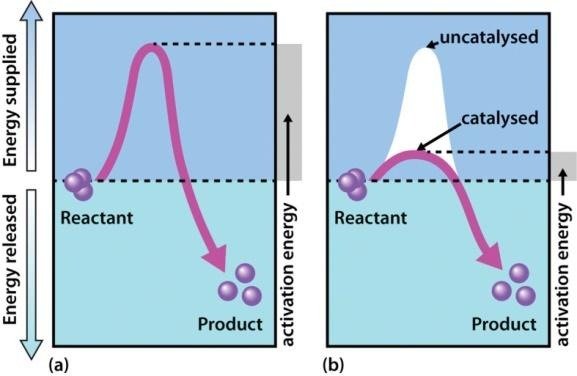
Figure 1 – Source: https://www.ncbi.nlm.nih.gov/pmc/articles/PMC4692135/
Why use Enzymes as Food Supplements to Promote Health?
The enzyme supplements have various functions that promote health. For example, some natural or herbal enzymes such as Fenugreek enhance enzymatic action and reduce inflammation, and gas and increase digestion (Herbalremedies.com, n.d.). Not only do these enzymes act as catalysts to decrease activation energy, and help in better gastric activity but they also act as lubricants, and digestive aids also (Herbalremedies.com, n.d.). Additionally, some people have difficulty processing or using digestive enzymes for which prescriptive digestive enzymes like Creon, and Pancreaze can be used (Brissette, 2019). Therefore, for people with digestive problems, enzyme supplements can be of great help.
What was being used before Food Supplement Enzymes?
The food-processing industry is quite old and dates back to 6000 BC or even earlier with bread-baking, beer brewing, and wine-making, to name a few. It was in the late XIX that Christian Hansen reported the formation of cheese with the use of rennet which led to modern approaches for the use of enzymes as food supplements (Fernandes, 2010). The modern practice of microbial cell culture in the food-processing industry is very common, however, the earlier plant and animal-derived food supplements acted as natural sources of food supplements. For instance, Avocados have the digestive enzyme lipase, and Honey is rich in amylase and protease (Key, 2021).
Risks involved with using Enzymes on living systems and the Environment
There are some risks associated with the use of processed food enzymes over animal and herbal enzymes. The risks of microbial and processed-food enzymes can be allergic reactions, diarrhea, stomach pain, and vomiting (Denhard, 2023). Additionally, over-the-counter drugs bring along other side effects like perforated esophagus, irritation, and burning sensation, to name a few (Windsor, 2023).
My Opinion on the bio-application of Food Supplement Enzymes
In my opinion, the use of enzymes in the food industry is a boon to a good extent. However, the enzyme-misuse or over-the-counter use of enzymes is not advisable as there are risks associated with the use of microbial-processed enzymes and artificial formulations. The heat, temperature, and pH of the enzymes if not maintained, can further be more damaging for use. Therefore, prescriptive enzymes should be encouraged to use and strict FDA regulation on the use of enzymes should be mandated to prevent enzyme misuse.
References
Brissette, C. (2019) Why you should be wary of some digestive enzyme supplements. The
Washington Post. Available at https://www.washingtonpost.com/lifestyle/wellness/why-you-should-be-wary-of-some-digestive-enzyme-supplements/2019/02/18/4531ef3e-2fdc-11e9-8ad3-9a5b113ecd3c_story.html
Denhard, M. (2023) Digestive Enzymes and Digestive Enzyme Supplements. Hopkins
Medicine. Available at https://www.hopkinsmedicine.org/health/wellness-and-prevention/digestive-enzymes-and-digestive-enzyme-supplements
ETA (2019) Dietary Supplementation using Enzymes. Enzyme Technical Association. Available at https://www.enzymetechnicalassociation.org/wp-content/uploads/2019/10/Dietary-Supplement.pdf
Fernandes, P. (2010) Enzymes in Food Processing: A Condensed Overview on Strategies for
Better Biocatalysts. Enzyme Research. Available at
https://www.ncbi.nlm.nih.gov/pmc/articles/PMC2963163/
Herbalremedies.com (n.d.) Probiotics-Enzyme-Colon Cleanse. Herbaldiabetes.com. Available
At http://www.herbalremedies.com/enzymes.html#TOP
Key, A.P. (2021) What are Digestive Enzymes? [Online]. Available at
https://www.webmd.com/diet/what-are-digestive-enzymes
Robinson, P.K. (2015) Enzymes: principles and biotechnological applications. Essays in
Biochemistry. Available at https://www.ncbi.nlm.nih.gov/pmc/articles/PMC4692135/
Windsor, R. C. (2023) What are Digestive Enzymes? VeryWell Health. Available at
https://www.verywellhealth.com/the-benefits-of-digestive-enzymes-89446